We count the harm, trace the source, stop the exposure.
GRIT moves beyond hazard to impact: how many people are exposed, how much harm follows, and what action prevents the most of it.
Current projects
Lead in food, including isotopic analysis to identify the primary source.
Lead in food
Evaluating lead in rice, wheat and other staples, and determining the ultimate source using isotopic evaluation methods.
Partners: Multiple in India, Columbia University, GAHP
Funding: Pure Earth
Lead in food
Sampling grains in the field, downwind of smelters. Includes isotopic analysis to determine the primary source.
Partners: Makerere University, Columbia University, GAHP
Funding: Pure Earth
Uncovering sources
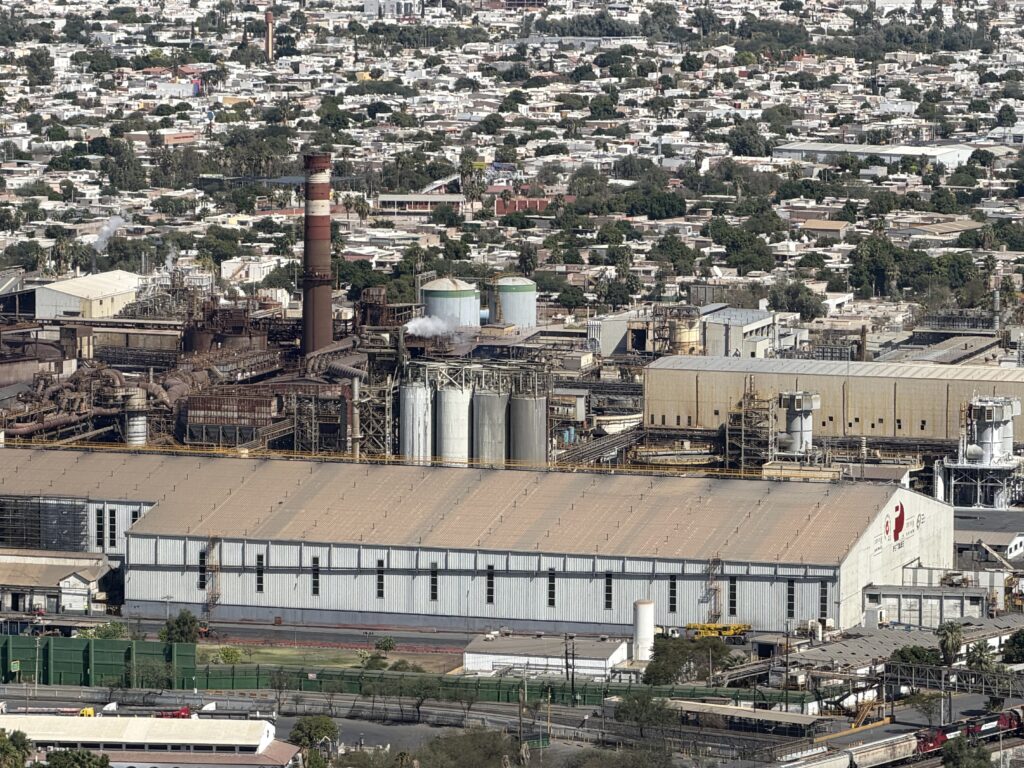
What are the main sources of lead poisoning in Mexico? Other sources beyond ceramic cookware are likely.
Partners: Ibero University, Columbia University
Lead in food
Sampling grains in the field, downwind of smelters. Includes isotopic analysis to determine the primary source.
Partners: KEPHIS, Columbia University, GAHP
Funding: Pure Earth
Aspirational projects
Work we would like to support, with implementing partners. A partial list.
Total Diet Studies
Many countries, including India, Bangladesh, Nigeria, Mexico, Indonesia and more, need high-quality representative studies of lead in food.
Policy solutions for industry and lead
If industry is the main source of food contamination, a path for reducing emissions, driven by a collaborative process, needs to be designed.
Deep analysis of arsenic
Arsenic is prevalent in many countries, yet programs are few, mostly only in Bangladesh. Expanding programs and testing efficacy for mitigation is needed.
Asbestos programs
Sadly, asbestos is still used around the world, and its impact will be felt for decades. Work to halt its use is needed.
Mercury programs
Exposure to methylmercury occurs not only through pelagic fish, but also through fish in rivers and ponds. Work is needed to determine the burden and design interventions beyond those for ASGM.
Pesticide programs
Good data on pesticide exposures and mortality and morbidity are needed, along with careful research on alternatives and cost effectiveness.
Resources: lead and food
GRIT papers and the main evidence we rely on.
| Paper | Link |
|---|---|
| A Strategy for Lead. GRIT guidance, October 2026. | Open → |
| Quantifying the Burden of Sources of Lead. GRIT, August 2026. | Open → |
| Further Estimates of Lead Burden from Various Sources. GRIT, October 2026 (revised). | Open → |
| Lead burden methodology. BMJ Global Health, volume 10, issue 3, e018145. | Open → |
| Kinally C, Hu H, Fuller R. Quantifying the global burden of lead exposure from dietary lead intake. medRxiv preprint, 2026. | Open → |
| Lake RJ et al. WHO estimates of the global, regional, and national burden of 42 foodborne infectious and chemical hazards, 2000 to 2021. Lancet Global Health, 2026. | Open → |
| GBD 2023 Lead Collaborators (Stanaway JD et al.). Lead-attributable cardiovascular disease burden. JAMA, 2026. | Open → |
| Landrigan PJ et al. The Lancet Commission on pollution and health. Lancet, 2018. | Open → |
| Pollution and health: a progress update. Lancet Planetary Health, 2022. | Open → |
Resources: other toxics
Papers and reports behind the Other toxics page.
| Paper | Link |
|---|---|
| Gibb HJ et al. Estimates of the 2015 global and regional disease burden from four foodborne metals. Environmental Research, 2019. | Open → |
| Oberoi S et al. Global burden of cancer and coronary heart disease from dietary exposure to arsenic, 2015. Environmental Research, 2019. | |
| Zang Y et al. Global burden of late-stage chronic kidney disease from dietary cadmium, 2015. Environmental Research, 2019. | |
| Asbestos: elimination of asbestos-related diseases. WHO fact sheet. | Open → |
| Arsenic. WHO fact sheet. | Open → |
| Preventing suicide by phasing out highly hazardous pesticides. WHO, 2024. | |
| Argos M et al. Arsenic exposure from drinking water and mortality in Bangladesh (HEALS cohort). Flanagan SV et al. Arsenic in tube well water in Bangladesh. Lancet 2010; Bulletin of the WHO 2012. | |
| Gunnell D et al. The global distribution of fatal pesticide self-poisoning. Mew EJ et al. The global burden of fatal self-poisoning with pesticides 2006 to 2015. BMC Public Health 2007; Journal of Affective Disorders 2017. | |
| Zhang H et al. Trans-provincial health impacts of atmospheric mercury emissions in China. Nature Communications, 2019. | |
| Hyman S et al. Phthalate exposure from plastics and cardiovascular disease. Lancet eBioMedicine, 2025. | |
| Estimating the burden of disease due to lead, PFAS, phthalates, cadmium, pyrethroids and bisphenol A. ETC-HE Report 2023/13 (HBM4EU), European Environment Agency. | |
| IARC Monographs: PFOA classified Group 1 (2023); PCBs and TCDD Group 1. IARC. | |
| IHME Global Burden of Disease 2019 and 2021; State of Global Air (HEI). IHME; Health Effects Institute. | |
| PBDE exposure and cancer mortality in the US population. NHANES analysis, 2024. |